Homeowner’s Guide to a Driveway Approach off a County Road
Planning a driveway off a county road? Learn the permits, requirements, and contractor steps to build a safe, county-approved driveway approach.
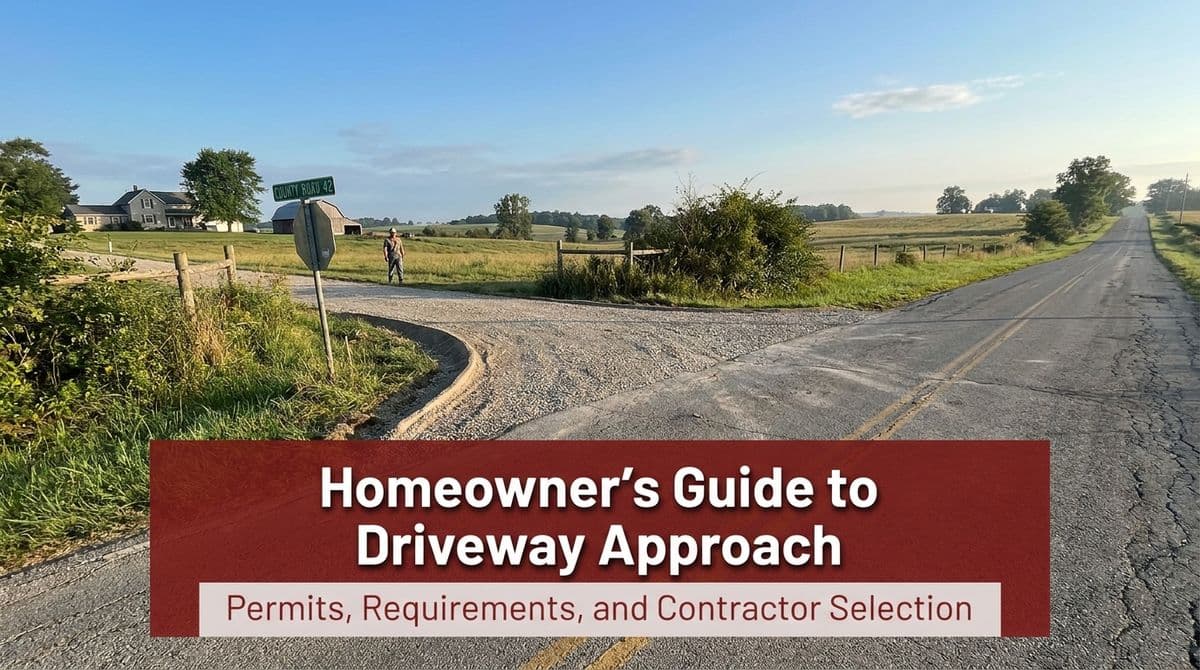
We Got a Call About a New Driveway Off a County Road
We recently got a call from a homeowner — let’s call him Tom — who owns some property off a county road and is putting in a new driveway. Tom had already worked with an engineer, gotten preliminary approval from the county for his approach, and knew he didn’t need a culvert. His big question was simple:
“Can you build the driveway approach from the county road to my property line and help me get this permit finalized?”
That’s exactly the kind of project we help with all the time. Tom had run into a common roadblock: the county wouldn’t issue final approval on his approach permit until a licensed and insured contractor signed off and built it to their standards.
Using Tom’s situation as a guide, let’s walk through what you need to know about building a driveway approach off a county road — from permits and requirements to picking the right contractor.
Step 1: Understand Your County’s Driveway Approach Rules
Tom had done one big thing right before he ever called us: he’d already talked to the county and gotten preliminary approval for his driveway approach.
Every county handles approaches a little differently, but most will have rules about:
- Permit requirements for any new access to a public road
- Width and slope of the approach
- Drainage and when a culvert is required
- Surfacing material (gravel, asphalt, concrete, etc.)
- Line-of-sight and safety for traffic on the county road
In Tom’s case, the engineer and county had determined that no culvert was needed, and the approach would be a gravel surface about 20 feet from the county road to the property line. The county had given him a thumbs-up on the concept, but they still needed a contractor involved before final approval.
Step 2: Know the Typical Permit Process
Tom told us he had initial approval but the county wouldn’t issue the final permit until a contractor signed off. That’s a very common setup. Here’s how the process typically goes:
- Contact the county road or public works department. Ask specifically about a “driveway approach” or “approach permit” off a county road.
- Submit a simple application. This often includes a site sketch, approximate location, and proposed width and surface type.
- County review or site visit. They check sight distances, traffic, drainage, and whether a culvert or special design is required.
- Preliminary approval. This is what Tom had: the county says “yes, you can put an approach here,” but with conditions.
- Contractor involvement. Many counties require a licensed and insured contractor to sign the permit, provide proof of insurance, and agree to build to county specs.
- Construction and final inspection. After the approach is built, the county inspects it and issues final approval.
It’s always wise to get the county talking to your contractor early. That way, there are no surprises about width, slope, or drainage right before you build.
Step 3: Insurance and Requirements Most Homeowners Don’t See
Tom mentioned something we hear a lot: “I know the county has strict requirements about how much insurance you have and all that.” He was exactly right.
When you tie directly into a public road, the county is protecting the public and themselves, so they usually require your contractor to provide:
- General liability insurance at a minimum amount (often $1M or more)
- Workers’ compensation coverage if the contractor has employees
- Possibly bonding for larger or more complex projects
- Agreement to follow county standards for construction and restoration of the roadway shoulder and ditch
This is one big reason why most counties will not accept a DIY driveway approach off a county road. Even if you’re handy, they want a professional who meets their insurance and safety standards.
Step 4: Site Visit vs. Phone Quote
When Tom asked if we could just give him a quote over the phone for a simple gravel approach, we told him what we tell everyone: we don’t quote sight-unseen. Every job is different, even when it sounds straightforward.
During a site visit, we’re looking at things like:
- Existing grade and slope from the road up into the property
- Drainage patterns along the ditch or roadside
- Road base condition and shoulder stability
- Space for equipment access and material delivery
- Any utilities nearby that could be impacted
For Tom, we scheduled a time to meet on-site, walk the 20-foot stretch from the county road to his property line, and compare what we saw to the engineer’s notes and county conditions. That’s the only way to give a realistic, accurate price and avoid change orders later.
Step 5: Choosing the Right Contractor for a County Road Approach
Tom told us he had found us online and chose to call because of our reviews. That’s a great starting point, but when you’re building off a county road, you’ll want to dig a little deeper. Here’s what we recommend checking:
- Experience with county approaches. Ask directly, “Have you built driveway approaches off county roads in this area?”
- Familiarity with your county’s process. A good contractor will already know who to talk to and what forms or specs the county uses.
- License and insurance. Make sure they can meet the county’s minimums and provide paperwork for the permit.
- Willingness to coordinate with the county. They should be comfortable signing the permit, answering inspector questions, and making adjustments if needed.
- Clear, written estimate. Once they’ve seen the site, you should get a detailed scope of work and cost.
Gravel, Asphalt, or Concrete: What to Tell Your Contractor
One of the first questions we asked Tom was, “Are you wanting it to be gravel, asphalt? What’s your approach going to be?” He chose gravel, which is common for rural and semi-rural properties.
Here are a few quick points to consider when you decide on a surface:
- Gravel: Lower upfront cost, easier to repair, but needs periodic maintenance and grading.
- Asphalt: Smoother and cleaner, good for frequent use, higher initial cost, and may require more strict base prep.
- Concrete: Very durable and low maintenance, but the most expensive and not always necessary for a short approach.
Tell your contractor your long-term plans for the driveway (for example, “gravel now, maybe asphalt later”) so they can build a base that supports future upgrades.
Bringing It All Together
If you’re like Tom and planning a new driveway approach off a county road, your steps are pretty clear:
- Talk to your county about an approach permit and basic requirements.
- Work with an engineer if needed, and secure preliminary approval.
- Find a licensed, insured contractor familiar with county standards.
- Have the contractor perform a site visit before giving a quote.
- Let your contractor coordinate with the county for final approval and inspection.
Handled the right way, your new approach will be safe, durable, and fully compliant — and you won’t be stuck in permit limbo, wondering what went wrong.